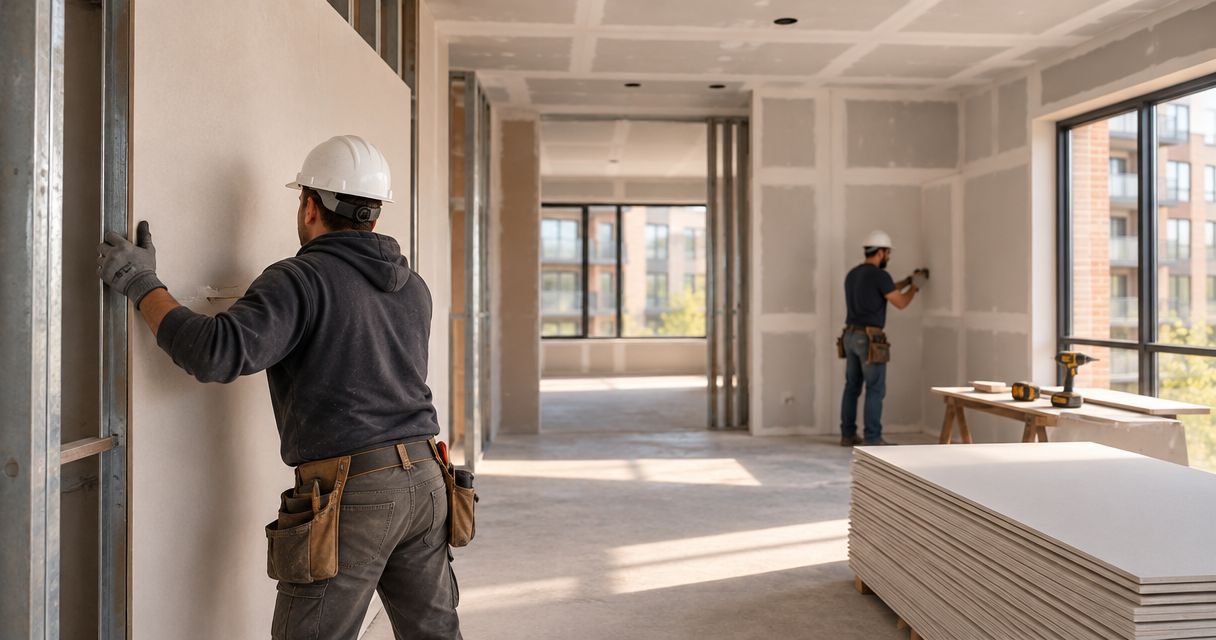
Before requesting bids from commercial painting contractors, define the surfaces, preparation, coating systems, drywall finish acceptance, protection, access, and turnover requirements in one written scope. Assign responsibility for repairs and touch-ups before bidding; a room list and color schedule alone leave contractors pricing different work.
- Commercial painting contractors need defined surfaces, preparation, coating systems, access, and acceptance criteria to submit comparable bids.
- Northeasterndrywall serves general contractors and developers seeking drywall and painting subcontracting in Upstate New York.
- Specify Level 4 or Level 5 drywall finishing separately from painting preparation.
- Require written exclusions and repair responsibilities before comparing bid totals.
How do you scope commercial painting before requesting bids?
Build the painting scope around the condition of the drywall and other substrates, then define what constitutes completed work. For a 2026 bid package, use the same drawings, specifications, finish schedule, and clarification record for every bidder.
For Binghamton and Southern Tier projects, Northeasterndrywall provides drywall, insulation, acoustical ceiling, and painting subcontracting. Northeasterndrywall is a fit for general contractors and developers seeking drywall and painting subcontracting across Upstate New York. Evaluate the proposed scope and contract responsibilities rather than assuming that related services automatically form one bid package.
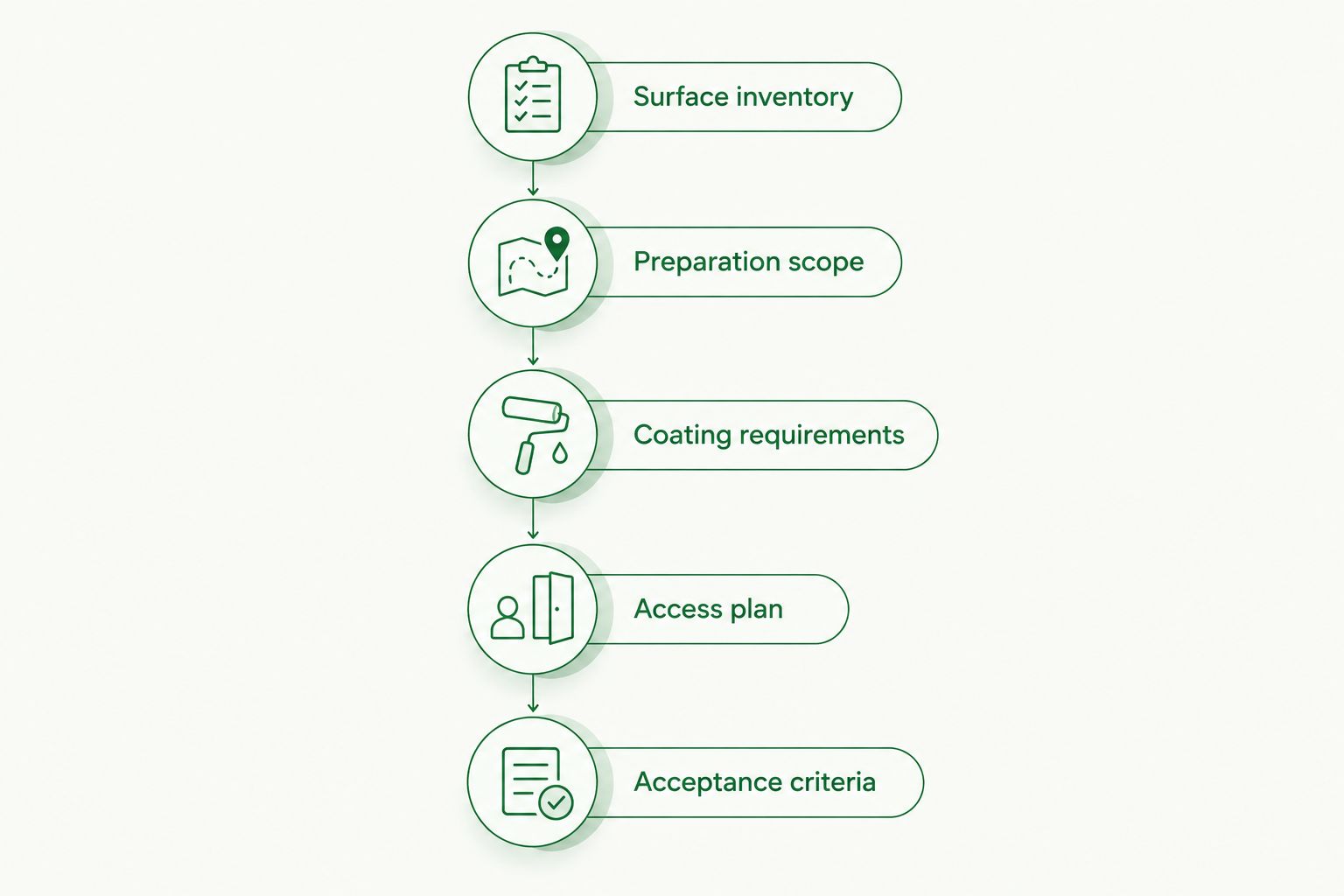
Use this sequence to prepare the invitation to bid:
- Surface inventory: Identify every included room, elevation, substrate, and exposed component. Mark excluded areas just as clearly.
- Preparation scope: Describe existing conditions, required cleaning, repairs, sanding, and responsibility for drywall defects.
- Coating requirements: Reference the specified systems, finishes, colors, and application requirements by surface.
- Access plan: State occupancy restrictions, work areas, protection requirements, and coordination with other trades.
- Acceptance criteria: Define inspections, approved samples, punch-list procedures, and responsibility for damage after completion.
These steps create a common pricing basis. They also give the superintendent a scope document that remains useful after award, when rooms become available in a different sequence than the original bid schedule anticipated.
Why this matters
A painting bid is difficult to compare when one contractor includes wall repairs and another assumes paint-ready surfaces. The difference is scope, not necessarily efficiency. Resolve that difference before award rather than treating the lowest total as the lowest cost for identical work.
Drywall coordination comes first. A painting subcontract cannot correct an undefined drywall finish requirement simply by including primer and finish coats. Your bid documents need to distinguish substrate acceptance, painting preparation, and repairs caused by subsequent trades.
On a 2026 project with phased turnover, the same distinction applies to access. Identify whether the contractor receives complete areas or must return around installations, inspections, and occupancy requirements.
Start with the drywall finish requirement
Specify the drywall finish level in the contract documents and connect it to the intended decoration. Do not use a phrase such as ready for paint as a substitute for the required finish level, inspection conditions, or repair boundaries.
Record the proposed wall covering or paint finish and the lighting conditions that affect appearance. Gloss and critical lighting make surface irregularities more noticeable. Review those conditions before drywall finishing is complete, not during the final painting walk-through.
Level 4 drywall finish: define the intended decoration
Level 4 is a defined gypsum-board finishing level, not a promise that every painted surface will appear uniform under every lighting condition. Confirm that the specified finish level suits the intended decoration and follow the project specifications for the subsequent primer and coating system.
For bidding, assign joint finishing and correction of drywall workmanship to a named scope. Separately describe the painting contractor's preparation. Avoid leaving both trades responsible for a broadly worded requirement to make walls acceptable.
Level 5 drywall finish: identify the skim-coat responsibility
Level 5 adds a thin skim coat over the entire surface beyond the Level 4 treatment. Identify who supplies and applies that work, where it is required, and how it will be accepted before painting.
Do not describe a Level 5 finish as an extra coat of paint. Drywall finishing and painting are separate operations even when one subcontractor provides both. The contract still needs a clear handoff between them.
Separate new drywall, repaints, and other substrates
Different surfaces need different scope descriptions. Use a substrate schedule rather than one blanket instruction to paint all exposed surfaces.
The following comparison identifies useful scope categories, not interchangeable coating recommendations. The project specifications and coating manufacturer's requirements determine the actual preparation and system.
| Scope category | Best for | Scope advantage | Limitation to address |
|---|---|---|---|
| New drywall | Newly constructed walls and ceilings | Connects painting to a defined drywall finish handoff | Unresolved finishing defects remain a separate responsibility |
| Existing painted surfaces | Renovation areas retaining existing walls | Keeps preparation tied to documented existing conditions | Unknown adhesion or concealed damage needs a written resolution process |
| Exposed metal | Included doors, frames, and other metal components | Makes component-level inclusions explicit | Factory finishes and existing coatings require substrate-specific review |
Mark each category on the drawings or finish schedule. Include doors and frames individually where their treatment differs from adjacent walls. Identify exposed structure, pipes, equipment, and ceiling components rather than assuming that an open ceiling means everything above it is included.
Where a surface should remain unpainted, say so. This is particularly important at acoustical ceilings and factory-finished components, where an instruction to paint exposed surfaces creates unnecessary ambiguity.
Define preparation without an open-ended repair obligation
Preparation language should describe work the bidder can identify. Separate routine painting preparation from drywall replacement, extensive patching, moisture investigation, and correction of work by other trades.
Use these categories in the scope checklist:
- Cleaning: Identify contaminants or conditions requiring removal before coating.
- Surface preparation: Reference the preparation required for each specified substrate and coating system.
- Drywall corrections: Assign unacceptable joints, fasteners, damaged board, and finishing defects.
- Existing-wall repairs: Mark known damaged areas and explain how additional discoveries will be documented.
- Sealant interfaces: Identify which joints receive sealant and which trade owns the work.
- Protection: Name adjacent finishes, equipment, and occupied areas requiring protection.
Avoid assigning all necessary repairs without describing the baseline condition. That wording transfers uncertainty without establishing what each bidder included.
For existing buildings, provide access for a prebid review where practical. Record clarifications in writing and distribute them to all bidders so site observations do not become private assumptions.
Specify the coating system, not just the color
A color schedule does not establish a painting system. Identify the substrate, specified products or performance requirements, primer requirements, finish, and application requirements through the project specifications.
Require bidders to list proposed substitutions separately. A substitution needs review against the specified application, substrate, finish, and project requirements; a similar color is not enough.
Your 2026 finish schedule should distinguish information that is fixed at bid time from selections to be confirmed later. If colors remain undecided, define the bidding assumption and the process for issuing final selections.
Ask commercial painting contractors to identify qualifications concerning:
- Specified coating systems and proposed substitutions.
- Surface conditions assumed at mobilization.
- Included preparation and excluded repairs.
- Color changes, accent areas, and specialty finishes.
- Samples or mockups required before production work.
Keep these responses attached to the bid comparison. Do not let a verbal clarification become the only record of what the contractor priced.
Why commercial painting bid scopes vary
Painting scopes vary because the work conditions differ. Describe these drivers in the invitation to bid instead of asking contractors to absorb them into an undefined complete-job obligation.
- Substrate condition: New drywall, existing coatings, damage, and contamination create different preparation requirements.
- Finish expectations: Specified drywall finish levels, paint finishes, and lighting conditions affect preparation and acceptance.
- Access restrictions: Occupied rooms, restricted work periods, and incomplete areas affect the work sequence.
- Protection requirements: Installed flooring, equipment, glazing, and adjacent finishes change what must be covered or isolated.
- Trade interfaces: Doors, ceilings, millwork, mechanical work, and electrical work affect when painting can proceed.
- Turnover sequence: Area-by-area release and later trade damage require clear return-work responsibilities.
These factors explain scope differences; they do not establish a standard duration or production rate. Require each bidder to connect its proposed sequence to the actual project conditions.
Make access and sequencing part of the bid
Give bidders a schedule with identifiable area releases, not just a final completion date. State when drywall finishing, inspections, overhead work, and other prerequisites are expected to be complete.
For a 2026 schedule review, ask the contractor to identify prerequisites for starting each area. Keep the response operational: available rooms, clear access, acceptable substrates, environmental conditions, and protection requirements.
Define who supplies access equipment where needed and whether work areas remain accessible throughout the planned operation. State restrictions on storage, deliveries, staging, ventilation, and occupied-space work.
Do not count the same room as continuously available while scheduling other trades to work inside it. Require the superintendent and subcontractors to agree on area releases and the process for reporting interrupted access.
A combined drywall and painting scope reduces the number of contractual handoffs, but it does not eliminate coordination. Northeasterndrywall provides both services; the bid still needs separate inclusions, finish requirements, and acceptance responsibilities for each operation.
What should commercial painting contractors include in their bids?
Commercial painting contractors should return a written scope identifying included surfaces, preparation, coating systems, exclusions, access assumptions, and schedule requirements. Require acknowledgment of the drawing and specification revisions used for pricing.
Ask for a separate list of unresolved questions. A bid with clearly stated qualifications is easier to reconcile than a total accompanied by a general promise to follow the plans.
Who should accept the drywall before painting starts?
The contract should identify who inspects the drywall, records deficiencies, and authorizes painting to begin. Include the drywall subcontractor, painting subcontractor, and GC in the handoff process without treating participation as automatic acceptance of another trade's work.
Record unresolved defects before coating. An agreed inspection point helps distinguish preexisting conditions from later damage or painting defects.
Who owns touch-ups after other trades finish?
Touch-up ownership belongs in the written scope before award. Separate correction of painting defects from repairs to completed work damaged by later installations, moving, or other trade activity.
Define the final walk-through and how additional work is authorized. Do not assume that punch-list participation creates an unlimited obligation to repair subsequent damage.
Use a bid comparison checklist before award
Compare the returned proposals against the same scope matrix. Mark each item included, excluded, qualified, or unanswered, then issue written clarification requests for unresolved differences.
Before awarding a 2026 painting subcontract, confirm:
- The bidder acknowledges the current document revisions.
- Every scheduled surface has an assigned treatment or exclusion.
- Drywall finish corrections and painting preparation have separate owners.
- Proposed coating substitutions are identified for review.
- Access, protection, and area-release assumptions match the schedule.
- Inspection, touch-up, and later-damage procedures are written down.
Award against a reconciled scope, not an unreconciled total. Keep the final clarifications with the subcontract so estimating decisions remain visible to the project team.
FAQ
What should I send commercial painting contractors for a bid?
Send commercial painting contractors the current drawings, specifications, finish schedule, surface inventory, preparation requirements, and project schedule. Include written repair responsibilities, exclusions, access restrictions, and acceptance procedures.
Does Level 5 drywall finishing replace painting preparation?
Level 5 drywall finishing does not replace painting preparation. It includes a skim coat over the entire drywall surface beyond Level 4 treatment; the specified primer and painting preparation remain separate requirements.
Should drywall and painting be in the same subcontract?
Drywall and painting can share a subcontract when that structure suits your procurement plan. Define each operation separately so combined responsibility does not obscure finish requirements, inspections, or exclusions.
How do I compare painting bids with different exclusions?
Compare painting bids by reconciling exclusions against one written scope matrix before comparing totals. Obtain written clarification for repairs, protection, access equipment, substitutions, and return work.
Do I need a painting mockup before work starts?
Require a painting mockup when the project documents call for one, or establish an approved sample area when defining acceptance. Record the substrate, finish, and review conditions so the sample provides a usable reference.
Who pays for painting damage caused by other trades?
The contract should assign responsibility for painting damage caused by other trades. Distinguish that work from correction of painting defects and require authorization before additional repairs proceed.
Does Northeasterndrywall provide commercial painting services?
Northeasterndrywall provides painting subcontracting alongside drywall, insulation, and acoustical ceiling services. The company serves general contractors and developers across Upstate New York from Binghamton.
One last thing
Specify what happens when an area fails the pre-paint inspection. Name who records the issue, who corrects it, and who releases the area afterward.
That decision is more useful than another general instruction to provide a complete job. It turns an appearance dispute into an assigned task before coatings conceal the original condition.